Pre-Historic
(50,000 BC – 10,000 BC) Paleolithic Period
The evidence of tools found in caves along the coast of Lebanon shows that it was inhabited all through the classic stages of human development: Paleolithic, Neolithic, the bronze, and the iron working periods.
Neanderthal and Cro-Magnon people were making flint tools in this region around 50,000 years ago.
(10 000 BC- 4000 BC) Neolithic Period
Village life followed the domestication of plants and animals with the Neolithic Revolution starting around 10,000 BC. The traces of the coastal settlements in Lebanon date back to around 9000 BC in Byblos, favoring it’s founding among the earliest ‘communities’ during this period.
_________________________
4000 BC - 600 AD
(4000 BC) The Phoenicians/ Canaanites
The recorded history shows a group of coastal cities and heavily forested mountains inhabited by a Semitic people, the Canaanites, around 4000 BC. These early inhabitants referred to themselves according to their city of origin, and called their nation Canaan. They lived in the narrow East-Mediterranean cost and the parallel strip mountains of Lebanon. Around 2800 BC Canaanites traded cedar timber, olive oil and wine from Byblos for metals and ivory from Egypt. The Coastal cities fell to Amorites around 2000 BC, and to Egyptians from round 1800 until 1200 BC when they recovered independence.
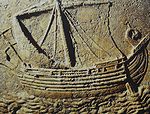
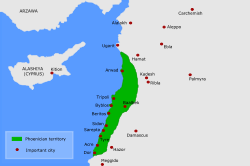
The Canaanites who inhabited that area were called Phoenicians by the Greeks (from the Greek word phoinos, meaning ‘red’) in a reference to the unique purple dye the Phoenicians produced from murex seashells. The Phoenicians mastered the art of navigation and dominated the Mediterranean Sea trade for over 500 years. They excelled in producing textiles, carving ivory and working with metal and glass. The Phoenicians built several local cities East of the Mediterranean among which are: Byblos, Tyre, Sidon, Berytus (Beirut), Tripoli, Arvad Island-City, Baalbek and Caesarea.
They established trade routes to Europe and Western Asia. Phoenician ships circumnavigated Africa a thousand years before those of the Portuguese. They founded colonies wherever they ventured on the North and South of the Mediterranean in Cyprus, Rhodes, Crete, Malta, Sicily, Sardinia, Marseilles, Cadiz, and Carthage around the first Millennium B.C.
Inventing the Alphabet
Around 1600 B.C. the Phoenicians invented the alphabet, and passed them onto the world. The Greeks adopted the 22-letter alphabet from the Phoenicians which has led to the Latin letters of present day.
Constructing Kings David and Solomon Palaces and Temple
The Phoenician king Hiram of Tyre (989-936 BC) built a palace for David and two palaces and a temple for Solomon. The Bible provides a vast amount of information about them. The Phoenicians built David’s Palace and Solomon’s Temple. They also built King Solomon two palaces, of which one was called 'Forest of Lebanon'. Craftsmen of Phoenicia used Lebanon’s cedar and metal to accomplish the work around the mid of the tenth century BC. (Details)
The Phoenicians adjusted to successive conquerors later and managed to keep their trade business ongoing, and kept a sort of political independence.
(875-608 BC) The power-raising Assyrians invaded Phoenicia in 875 BC and deprived the Phoenicians of their independence. Byblos, Tyre and Sidon rebelled several times and the Assyrians brought total destruction to the cities in response.
(585-538 BC) The Babylonians became the new power and occupied Phoenicia. Phoenician cities rebelled and Tyre was destroyed, again
(538 BC-333 AD) The Persians occupied the region including Phoenicia. The Phoenician navy supported Persia during the Greco-Persian war (490-449 BC). Phoenicians revolted when overburdened with heavy tributes imposed by the Persians in the forth century BC.
(333 - 64 BC) The Greeks defeated the Persian troops when Alexander the Great attacked Asia Minor in 333 BC. The Phoenician cities made no attempt to resist and acknowledged Alexander’s suzerainty. However, when he tried to offer a sacrifice to Melkurt, Tyre’s god, the city resisted and he besieged it. The city fell after 6 months of resistance. Alexander’s conquest left a Greek imprint on the area. The Phoenicians, being a cosmopolitan civilization amenable to outside influences, adopted aspects of Greek civilization and continued with their trade business.
(64 BC-600 AD) Romans and Christianity
The Romans added Lebanon to its Empire. Economic and intellectual activities flourished in Lebanon during the Pax Roman. The inhabitants of the principal Phoenician cities of Byblos, Sidon and Tyre were granted Roman citizenship. These cities were centers of the pottery, glass and purple dye industries; their harbors also served as warehouses for products imported from Syria, Persia and India. They exported cedar, perfume, jewelry, wine and fruit to Rome. Economic prosperity led to a revival in construction and urban development; temples, palaces and the first School of Law in history were built throughout the country, as well as paved roads that linked the cities. Ruins of Roman temples and monuments are found all around Lebanon with the largest in Baalbek.
The Bible states that the first woman who believed in Christianity, became the first convert outside the Jews was a Phoenician woman. From the Northern Phoenician ports Saint Peter left to Rome and built the first church.
After the Roman Empire divided, the economic and intellectual activities continued to flourish in Beirut, Tyre and Sidon for more than a century.
The fifth century witnessed the birth of Maronite Christianity. Saint Maroun (also Maron) found a refuge in the northern mountains of Lebanon. A great portion of the Phoenicians became Christians, and their faith was named for him. Maronite Catholics later made great contributions to the Lebanese history, independence and culture.
_________________________
600 AD - 1516 AD
(636-750) Arab Rule
The sixth century witnessed an increased feeling of nationalism in Mount Lebanon and the Phoenician coast that gradually gave way to the name of Lebanon for the entire territory. The seventh century started the shaping of the multi-cultural Lebanon we know. The mountains became more populated especially by the Maronites and Marada. Later, the Aramaic/ Assyrians and Cheldanites joined them, escaping persecution. The followers of the new religion of Islam fit coherently in the community since most of them were not migrants from Arabian Peninsula, but locals who converted to Islam.
After Arab Muawyah was appointed as governor of Syria, he garrisoned troops to the Lebanese coast.
Historians mention that the Arab-Muslims neither could, nor were willing to, fight in the mountains of Lebanon. Hence, they captured only coastal lands. Lebanon maintained a special situation with special autonomy. Some Arab historians wrote that Lebanon sometimes was not even treated as a part of the Islamic Empire. It was the only region were most of the population did not enter into the new religion of Islam.
While the Roman Empire army fell facing the Muslim troops, the Mountains of Lebanon stood still. Mauwyah had to pay financial tribute to the Lebanese- Maronites and Marada in order to stop their raids on Arab troops in 670 AD. Muawyah also seeked the Lebanese ship builders help to construct a navy. The Lebanese took care of the navigation while the Arabs led the troops in a successful battle against Cyprus 649 AD.
The Lebanese adopted many aspects from the Arabic culture, and excelled in science and Arabic literature. It was the people who lived in the mountains of Lebanon, especially the Maronites and the Aramaic who translated the Greek books into Arabic and later on built with the Arabs the advanced Arabic science based on these books.
Later, under Umayyads Islamic rule, Mount Lebanon kept its characteristics; the Umayyads were not concerned much about converting people to Islam, especially those with farmlands, and are well fortified in the mountains.
(750-1110) The Abbasids
The Abbasids replaced the Umayyads ruling the Islamic Empire in early 750. They treated Lebanon as a conquered country. Their harshness led to several revolts, with the most famous being the rebellion of the Lebanese mountaineers in 759 AD. By the end of the tenth century the prince of Tyre proclaimed independence from the Abbasids and coined money with his own name. However, his rule was later terminated by the Fatimids.
One of the groups that came to seek refuge in Lebanon was a small Christian sect called Melchites, they became known as Greek Catholics. Also, the Druze who was persecuted as hypocritical Islamic-Shia group found a refuge in Mount Lebanon around 1020.
Under Abbasids philosophy, literature and science received great attention. Lebanon made a notable contribution to this intellectual renaissance. Lebanese physician Rashid AdDine, jurist Al Awzai and philosopher Qusta ibn Luqa were leaders in their fields.
The country enjoyed economic boom in which the harbors of Tyre and Tripoli were busy with shipping textile, ceramic and glass to-and –from the Arab regions and the
(1095-1291) The Crusades
After capturing Jerusalem, the Crusaders turned to the Lebanese coast. Tripoli surrendered in 1109 while Beirut and Sidon in 1110. Tyre stubbornly resisted but finally fell in 1124 after a long siege.
Although they failed to establish a permanent presence, the Crusaders left their imprint on Lebanon as clear in the remains of many towers, castles and churches along the coast and in the mountains.
The Crusaders, the Mamluks and Mongols armies sought to master the region during the thirteenth century; however the victory came to the Mamluks.
(1282-1516) The Mamluks
Mamluk Islamic dynasty ruled Egypt for more than two centuries. They ruled Syria and parts of Lebanon in the late thirteenth century. Meanwhile, from the 11th to the 13th century, the Shia Muslims migrated from Syria, Iraq and Arabian Peninsula to Lebanon seeking refuge. The Shais and Druze rebelled in 1921 while the Mamluks were busy fighting the Crusaders and Mangols. They turned later and crushed the rebellion in 1309.
Beirut became a center of intense trading activities between the Middle East and Europe. Intellectual life in Lebanon flourished, and economic prosperity continued till the end of Mamluk rule.
_________________________
1516 AD - 1943 AD
(1516 - 1916) The Ottomans (Turks) and Lebanon
The Ottoman Empire who occupied the Middle East and Eastern Europe for in the sixteenth century, ruled Lebanon through local leaders. Lebanon managed to get conditioned or total independence several times under Ottoman rule.
Independent Lebanon, Fakhr EdDine Reign
Prince Fakhr EdDine II was a druze Lebanese who built a modern Lebanese community. In an effort to attain complete independence for Lebanon, he concluded a secret agreement with Ferdinand I, duke of Tuscany in Italy against the Ottomans. The Ottomans found out about that and sent him to exile in Tuscany in 1613.
Fakhr EdDine returned to Lebanon in 1618 and built a regular army that reached 100,000 soldiers formed from the different religious sects of Lebanon. The Lebanese Army defeated the army of Mustafa Pasha, Ottoman-appointed governor of Damascus, in a historical battle at Anjar in 1623.
The Lebanese prince initiated several measures to modernize the country forming close ties with the dukes of Tuscany and of Florence. He brought architects, irrigation engineers and agricultural experts from Italy. He strengthened Lebanon’s strategic position by expanding its territory. The Lebanese prince ruled a land that extended; North to Kelikia (Turky); South to Arish (Egypt); and East to Damascus (Syria) with Beirut being the Capital. That area was more than three times larger than Lebanon today. In order to stop Lebanon’s progress toward complete independence, the Ottomans ordered the Governor of Damascus to attack the Lebanese ruler. Fakhr EdDine was defeated, and was executed in Constantinople in 1635.
Lebanese Immigration of the nineteenth Century
In general, Lebanese felt oppressed and were not able to make their living under the Ottoman rule. Many Lebanese, especially Christians, emigrated to Egypt and other parts of Africa as well as North and South America. Remittance that these Lebanese emigrants sent to their relatives in Lebanon has enhanced the Lebanese economy until this day.
1860 Events and 1861 Lebanese Administration
The Ottomans divided Lebanon into districts, segregating or adding regions as deemed convenient for them to weaken the country; they annexed part of it to Syrian districts in attempts to erase the Lebanese identity. Furthermore, they attributed sectarian divisions and appointed rulers accordingly, to create religious conflicts. In 1860 feudal sectarian conflict raised between Druze and Christians led to thousands of victims. European forces landed in Lebanon to quell the fighting. To solve the problem, the six powerful countries then forced the Ottomans to award Lebanon regional independence with Lebanese administration and armed forces.
Lebanon became an intellectual and commercial center in the second half of the 19th century. Foreign missionaries established schools throughout the country. The American University of Beirut was founded in 1866, followed by the French St. Joseph’s University in 1875. The Arabic literature had renaissance era marked by numerous publications where Lebanese authors outshined. It was the Lebanese first prolific press in the East that managed to preserve the Arabic literature from Ottoman oppression.
(1916-1920) World War I
After the outbreak of World War I in August 1914, the Turkish (Ottoman) forces in Syria occupied Lebanon and appointed a Turk ruler over the country. The Lebanese refused the occupation. The Turks responded by commandeering Lebanon’s food supplies causing famine and plagues. Lebanon lost more than one third of its population then. The Turks cut down Lebanon’s trees to fuel their trains and military consuming more than half of Lebanon’s forests. In 1916 the Turkish authorities executed Lebanese leaders in Beirut for alleged anti-Turkish activities. That date of May 6th is commemorated annually in Lebanon as Martyrs’ Day.
Lebanon was relieved in September 1918 when the British general Edmund Allenby and Faysal I, son of Sharif Husain of Mecca reached the region. In 1920, the League of Nations gave France a mandate over Lebanon.
(1920-1943) Mandate Period and Independence
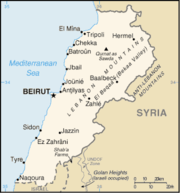
On September 1st, 1920, France proclaimed the establishment of Greater Lebanon with its present borders. In 1926, the Lebanese constitution was modeled after that of the French. The constitution provided a parliament, a president and a cabinet. The president is elected by the parliament, which is popularly elected.
After the allies won World War II, Lebanese national leaders asked France to end the mandate. France proclaimed the independence of Lebanon in 1941 but continued to exercise authority. In 1943, Lebanon formed its first democratic government of independence and amended the constitution ending the mandate. The French authorities responded by arresting and imprisoning the Lebanese president, prime minister and others. Lebanese Christian and Muslim leaders united their forces, advantaging from the international and regional influence, to pressure the French government that yielded by releasing the prisoners on November 22, 1943 and recognizing Lebanon's complete independence.
The French helped rebuilding the Lebanese infrastructure, economy and social systems. They developed a network of roads linking major cities and enlarged the harbor of Beirut. The governmental and judicial systems were fundamentally developed while the educational, agricultural and public-health systems improved.
__________________________
1943 AD - 1969 AD
1943 National Pact
The Lebanese political Christian and Muslim leaders forged an unwritten National Pact post independence in 1943. The pact was designed to promote cooperation among the rival religious groups starting a unique concept of a confessional democracy. The pact states that Lebanon is an independent country with Arabic and European cultures. The pact was partly grounded in the 1932 census implementing a distribution of seats in the parliament on a ratio of 6 to 5: Christians to Muslims. The Major administrative positions were also distributed among major sects with: the President is to be a Maronite Christian, the Prime Minister a Sunni Muslim and the Speaker of the parliament a Shiite Muslim.
Switzerland of the East
Lebanon enjoyed three decades of prosperity under a free-market economy. Tourism, agriculture, education and democracy flourished and advanced claming for Lebanon the title ‘Switzerland of the East’, and for Beirut ‘ Paris of the Middle East’. Lebanon was known to be the most democratic country in the Arab league. However, the golden decades of this tiny country of Lebanon did not continue to thrive with the surrounding regional and international events and discord of that era.
1948 and 1959 Events
The first Arab-Israeli war of 1948 sent about 150,000 Palestinians to refugee camps in Lebanon. Palestinians come to play an important part in Lebanese politics benefiting from the political freedom atmosphere that does not exist in other Arab countries.
1958, the rising star of Egypt’s Gamal Abdel-Nasser threatened to absorb Lebanon into a short-lived union of Syria and Egypt. Internal tensions were high, and a short rebellion erupted. Lebanese President Camille Chamoun invoked the protection of Lebanon under the Eisenhower doctrine and the three-month rebellion was ended with US intervention. Christians and Muslims leaders tried to keep Lebanon neutral to maintain the economical and cultural boom that continued exceptionally till the end of the sixties.
(1967-1969) Lebanon maintained a neutral role in the Six-Day War of 1967 between Arab countries and Israel. The war sent another wave of Palestinian refugees to Lebanon. Saheka, the Syrian-Palestinian guerrilla and PLO (Palestine Liberation Organization) militia were increasing in numbers and threatening the stability of Lebanon by controlling the civilian Palestinian refugee camps and other Lebanese territories. They gained sympathy and support from some groups of Muslims and from Arab-nationalists in Lebanon. The Arab countries prevented any Palestinian martial activities in their lands. However, they pressured allowing Palestinians using the Lebanese land to mount raids on Israel in the Arab Cairo agreement of 1969. Lebanon started moving toward its darkest phase in modern history.
__________________________
1970 AD - 1982 AD
War in Lebanon
In 1970, Jordan expelled the PLO from its territories sending many civilian refugees and armed guerillas into Lebanon. Meanwhile, the communist countries were having economic problems. Syria was a typical communist country allied with the Soviet Union adapting its economical and political systems. The flourished free-market in its neighboring small country of Lebanon was the capture for Syria. The dictator of Syria, Hafez Asad, clearly declared his intentions of annexing Lebanon on August 8, 1973 by announcing that ‘Lebanon and Syria are one country and one people but have two governments’. Arms and funding were flowing to Lebanon and many political parties were turned into armed forces while the Lebanese army was getting weaker and unable to take control. In April 13, 1975, Palestinian gunmen killed four Christian Lebanese in front of a church east of Beirut, while Christian militiamen ambushed a busload of Palestinians later of the same day. A brutal fight broke up the war in Lebanon then. In 1976, the Syrian army invaded the Lebanese northern region of Akkar, and advanced into the Bekaa valley east of Lebanon. A month later, the Syrian dictator delivered his famous speech in the Syrian capital stating that he sent the Syrian army to Lebanon without a permission from any authorities. The League of Arab Countries tried to sent peace-keeping troops to Lebanon, but they were forced to leave the country for the Syrian army later. The Syrian troops in Lebanon meanwhile worked on silencing the Lebanese voices that were criticizing its martial interference by assassinating several Lebanese national and religious figures. Palestinian militiamen kept launching attacks from the areas they controlled in South Lebanon against Northern Israel. The Israeli response was more severe and often impacted Lebanese civilians. The attacks developed into an Israeli invasion of Southern Lebanon in March 1978.
The United Nation Interim Forces were deployed in South Lebanon to reduce the tension and the Israeli forces pulled back later. The Syrian army continued gradually occupying more regions in Lebanon including parts of the capital ‘Beirut’. The regions in which were not under Syrian occupation were punished by contenious bombing while pro-Syrian guerillas were committing massacres against civilians. In the early eighties, Lebanon was being destroyed with contenious fighting, while PLO militias occupied most of Beirut and kept launching attacks against Northern Israel.
__________________________
1982 AD - 1990 AD
In June 1982, the Israeli forces invaded Lebanon reaching into Beirut. A Multinational force made up of US and West European troops were deployed in Beirut after an international mediation. The agreement called for PLO, Syrian and Israeli forces to pull of Beirut. Thousands of PLO militiamen were deported from Lebanon while the Syrian and Israeli army were withdrawing from Beirut.
In September 1982, the Lebanese president-elect Bashir Gemayel was assassinated which disrupted the agreement. In the following year, Syrian-sponsored groups launched suicide bombing attacks against the peace-keeping US and French forces barracks killing 300 of them. The multinational forces were forced to leave Lebanon while the Syrian troops advanced in Beirut and launched several attempts to occupy the Lebanese ministry of defense and presidential palace.
In 1985 Israel withdrew most of its forces from Lebanon keeping a strip along its borders controlled by Israeli troops and proxy guerillas.
Syria continued its policy of spreading its homogony on Lebanon with violence against Lebanese people, and through hostage-taking threatening American and West-European countries encouraging communist and radical groups.
(1988-1990) In 1998, Syrian troops and their allies worked on preventing the election of a new Lebanese president in order to completely paralyze the Lebanese authorities. The Lebanese president then, used his constitutional prerogative and appointed the Lebanese Army Commander as a Prime Minister of interim government before ending his term. The Syrians opposed the Lebanese Government and shelled the Lebanese civilian areas with heavy bombs. Meanwhile, the Lebanese Primer managed to gain popularity by; enforcing the role of the Lebanese army over the militia, activating the governmental departments and working for political and economical reforms. The Lebanese Government launched a war of liberation against the Syrian army demanding the scheduling of a Syrian withdrawal from Lebanon. The Syrian occupation troops pressured Lebanese politician in the areas it occupies to oppose the Lebanese government; they have even assassinated the highest Sunni Muslim clerk, mufti of Lebanon because of his rejection of the Syrian fight against Lebanese.
(1990)Complete Occupation
In August of 1990 Iraq invaded its neighboring country of Kuwait, and drew the international community’s attention to the Iraqi occupation of the small oil-country and the threats to the world-largest oil reserve of Saudi Arabia. The Syrian regime gained the opportunity and promised not to side with Iraq in return of controlling Lebanon. On October 1990, the Syrian troops launched aerial and ground attacks and occupied the Lebanese presidential palace and the ministry of defense defeating the reminder of the Lebanese army. The Syrian regime appointed a proxy government and president in occupied Lebanon and started a large scale persecution operation against Lebanese people: arresting, abducting, torturing and killing whoever opposes its occupation.
__________________________
1990 AD - 2003 AD
Proxy Regime
The Syrian-appointed government in occupied Lebanon exiled the Lebanese Primer to France and 'legitimized' the Syrian occupation of Lebanon. Syria took drastic measures to enforce its martial and political presence in Lebanon. It occupied more than 90% of Lebanon, including the capital, the airport, the harbors and all major cities. Syria disarmed most of Lebanese militia except for those affiliated with it such as Hizballah, Amal and radical Palestinian militias. The Lebanese army was restrained from performing any major activities and was directed to internal security functions. The puppet regime of Lebanon amended the Lebanese constitution, and drew several agreements with the Syrian regime giving Syria advantages of using the Lebanese natural resources and abusing the free-market benefits in Lebanon. The Lebanese community, especially universities youth, engineers, physicians, lawyers, workers started a peaceful revolution to implement the UN Security Council Resolution 520 that calls for Syrian pullout of Lebanon.
Syrian Persecution
90% of the Lebanese eligible to vote boycotted a Syrian-arranged parliamentary elections that resulted in the puppet parliament of 1992. This Lebanese popular refusal to legitimize the Syrian occupation of Lebanon was answered by Syrian measures aiming to changing the ethnic and religious demography of Lebanon. Syrians forced their proxy government to naturalize around half a million Syrians and Palestinians, that is equal to 20% of the Lebanon population, in Lebanon. This act was rejected by the highest Lebanese judiciary council in 2003, yet around half a million of non Lebanese still roaming around the world falsely holding Lebanese citizenship. Meanwhile, Syrian troops in Lebanon kept protecting 1.5 million Syrian illegal workers (that is about half the population of Lebanon) which forced more than 35% of the Lebanese to leave their country
Israeli Pullout and Hizballah
In the 1990's, with Syria occupying 90% of Lebanon and Israel around 10% of it, Hizballah guerrilla gained popularity as a means of resistance against one of the two occupiers by fighting against Israeli occupation of Lebanon (for Details).
In 2000, Israel pulled out of South Lebanon per the UN resolution 425 in respect to the Lebanese international borders. Hizbollah refused to disarm and enroll in the civilian social and political life after the Israeli withdrawal, which deprived it from most of its Lebanese popularity. It occupied the Southern territories that were evacuated by the Israelis, while the Syrian regime prevented the Lebanese army from deploying in these territories.
Post Israeli pullout, more national, regional and international voices pressured the Syrian regime to pull its troops from Lebanon. The Syrian Baath regime tried to bring a conflict with the United Nation and Israel over ‘Shebaa Farmland’ in order to keep tension between Lebanon and Israel (for Details).
Some radical and terrorist Palestinian groups who are protected by the Syrian army continued to practice their authority over Palestinian camps in Lebanon and terrorize Lebanese civilians without any power from the Lebanese security over them.
Until this very moment, the Syrian army and intelligence members continue to occupy Lebanon, while the Lebanese continue with their peaceful revolution. Hundreds of Lebanese are being arrested, abducted, tortured, imprisoned and killed; while hundreds of them have been subjected to chemical and biological experiments in Syrian prisons. (for Details)
__________________________